
Why Redesigning Process Before an ERP or Accounting Software Change Creates 10× Better Outcomes
By TED ROSE, ROSE FINANCIAL SOLUTIONS
Most ERP or Accounting Software implementation projects begin with a familiar assumption:
“We’ll redesign our processes during implementation.”
That approach feels efficient—but it’s backward. And it’s one of the primary reasons ERP investments fail to deliver expected value.

The Problem with ERP-Led Process Redesign
When process redesign happens inside an ERP implementation, organizations face predictable challenges:
- Decisions are rushed to meet go-live deadlines
- Workflows are shaped by system constraints—not business needs
- Inefficiencies get hard-coded into the platform
- Teams experience change fatigue before value is realized
- Adoption suffers because people never truly own the process
ERP ends up defining how people work—rather than enabling how the business should work.
A Better Model: Fix Process First
High-performing companies take a different path. They separate process transformation from system implementation. Before touching the ERP, they:
- Redesign finance processes outside the system
- Standardize workflows across teams
- Automate repeatable activities
- Clarify roles, ownership, and decision rights
- Prepare people for the future-state operating model
This is where an agility layer becomes critical.
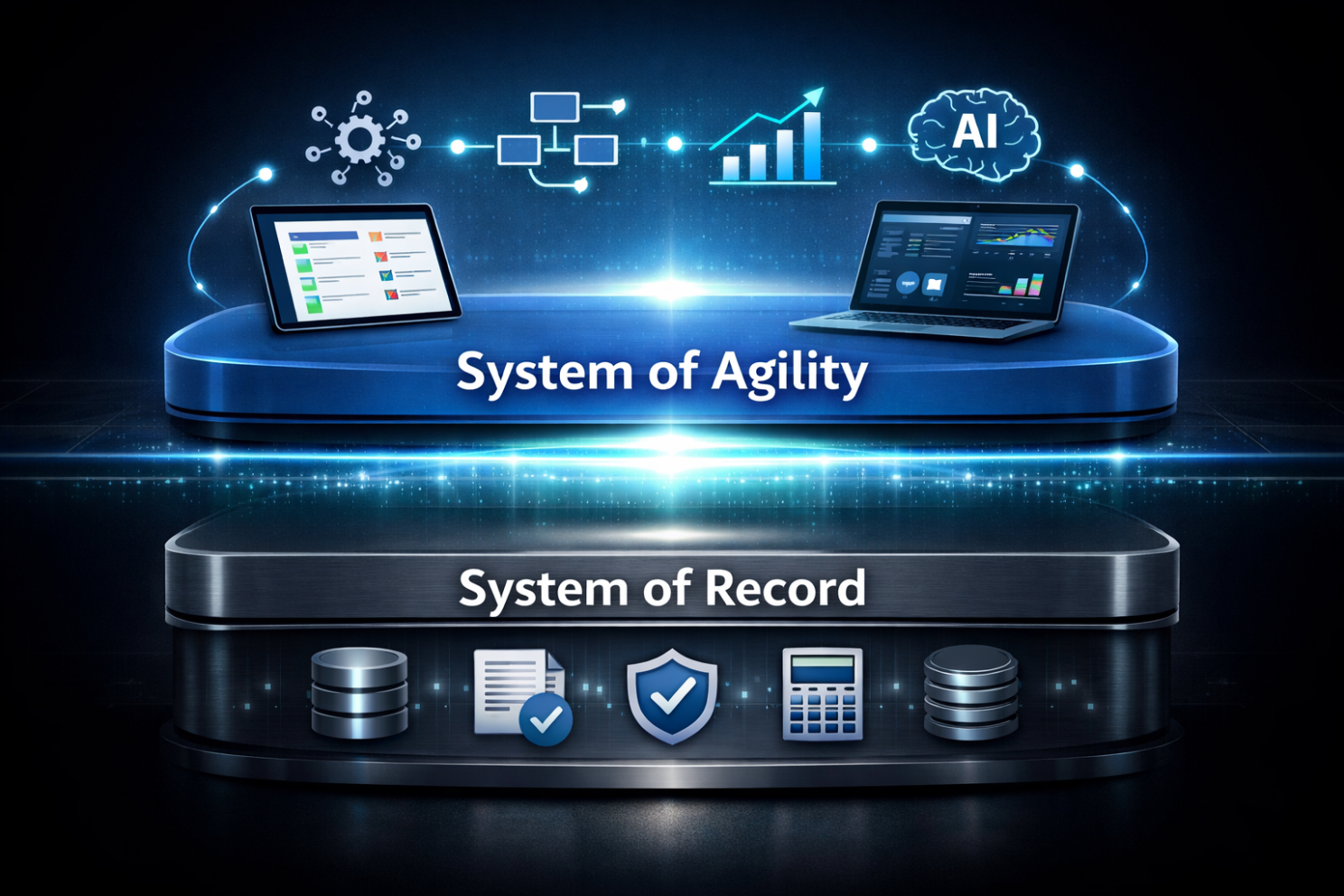
Rather than forcing change through the ERP, leading organizations use an execution and intelligence layer—such as Easby by ROSE—to design, test, and run modern finance workflows alongside their existing ERP.
Why This Approach Works
This layered strategy delivers materially better outcomes:
- Faster adaptation as the business evolves
- Lower ERP implementation risk
- Higher user adoption
- Cleaner, more reliable data
- Continuous improvement without constant system changes
Because people learn the process before the ERP changes, adoption accelerates and resistance drops.
ERP Becomes What It Should Be
When process leads and systems follow, ERP is no longer expected to:
- Fix broken workflows
- Train your team
- Enforce discipline
- Provide real-time intelligence
Instead, it does what it does best:
- Record transactions
- Maintain data integrity
- Support compliance
- Act as a stable backbone
ROSE supports this model by providing Finance as a Service, combining people, process, and technology—while Easby functions as the agility layer that enhances ERP value without requiring a rip-and-replace.
The Bottom Line?
Modern finance isn’t built as a monolith. It’s built in layers.
Process first.
People prepared.
ERP as infrastructure—not strategy.

Ted Rose
In 1994 Ted Rose founded Rose Financial Solutions (ROSE), the Premier U.S. Based Finance and Accounting Outsourcing Firm. In 2010, the Blackbook of Outsourcing named ROSE the #1 FAO firm in the world based on client satisfaction. As the president and CEO of ROSE, he provides executives with financial clarity. Ted has also acted as the CFO for a number of growth companies and assisted with various rounds of financing and M&A transactions.
Share this article:
Visit Us On: