
The Modern CFO Is Overloaded, and It’s Costing Companies More Than They Realize
By TED ROSE, ROSE FINANCIAL SOLUTIONS
The role of the CFO has fundamentally changed.

Today’s CFO isn’t just managing the numbers. They are:
- Recruiting and retaining scarce finance talent
- Navigating compliance and audit pressure
- Closing books faster with fewer resources
- Guiding the leadership team with forward-looking insight
- Managing ERP upgrades and technology integrations
- Responding to increasing board expectations
In theory, the CFO is the architect of financial strategy. In reality, many are buried in operational drag.
The Hidden Cost of an Overloaded CFO
When finance leaders are overwhelmed by execution, companies pay the price, often without realizing it. The symptoms show up as:
- Slower decisions because data isn’t available in real time
- Reactive reporting instead of proactive insight
- Leadership burnout at the CFO and controller level
- Hidden inefficiencies buried inside legacy workflows
- Overinvestment in headcount to compensate for broken processes
None of these issues show up cleanly on a P&L. But they quietly erode valuation, agility, and confidence at the board level. And in today’s market, speed and clarity are competitive advantages.
The Problem Isn’t the CFO
It’s the infrastructure. For decades, companies built finance teams around manual processes supported by ERP systems. When complexity increased, the default response was predictable:
- Hire more staff
- Upgrade the ERP
- Add consultants
- Layer on new tools
But here’s the reality:
- Tools don’t fix workflow friction.
- ERP systems are systems of record, not systems of intelligence.
- Consultants leave.
What remains is a finance organization that still depends on human effort to move data, reconcile systems, and produce insight. That model does not scale.
Finance Should Operate as a Decision Engine
Modern organizations need finance to function as a real-time decision engine, not a historical reporting department. That requires:
- Automated reconciliations
- Continuous close processes
- AI-enabled exception detection
- Standardized reporting logic
- Clean, structured, decision-ready data
When infrastructure is designed correctly:
- Humans focus on judgment and strategy
- Reporting becomes near real-time
- Controls strengthen
- Costs stabilize
- Growth becomes easier to support
This is not about replacing people. It’s about elevating them.
A Better Starting Point
Before hiring, upgrading, or restructuring, leadership should ask a more fundamental question: Is our financial system actually ready for the next stage of growth?
Most companies don’t have a clear answer. That’s why we built the ROSE Financial System Readiness Assessment. In 10 minutes, CEOs and CFOs can quickly identify:
- Process bottlenecks
- Technology gaps
- Control weaknesses
- Reporting inefficiencies
- Scalability risks
From there, a structured Financial System Readiness Review creates a roadmap without requiring you to build everything internally.
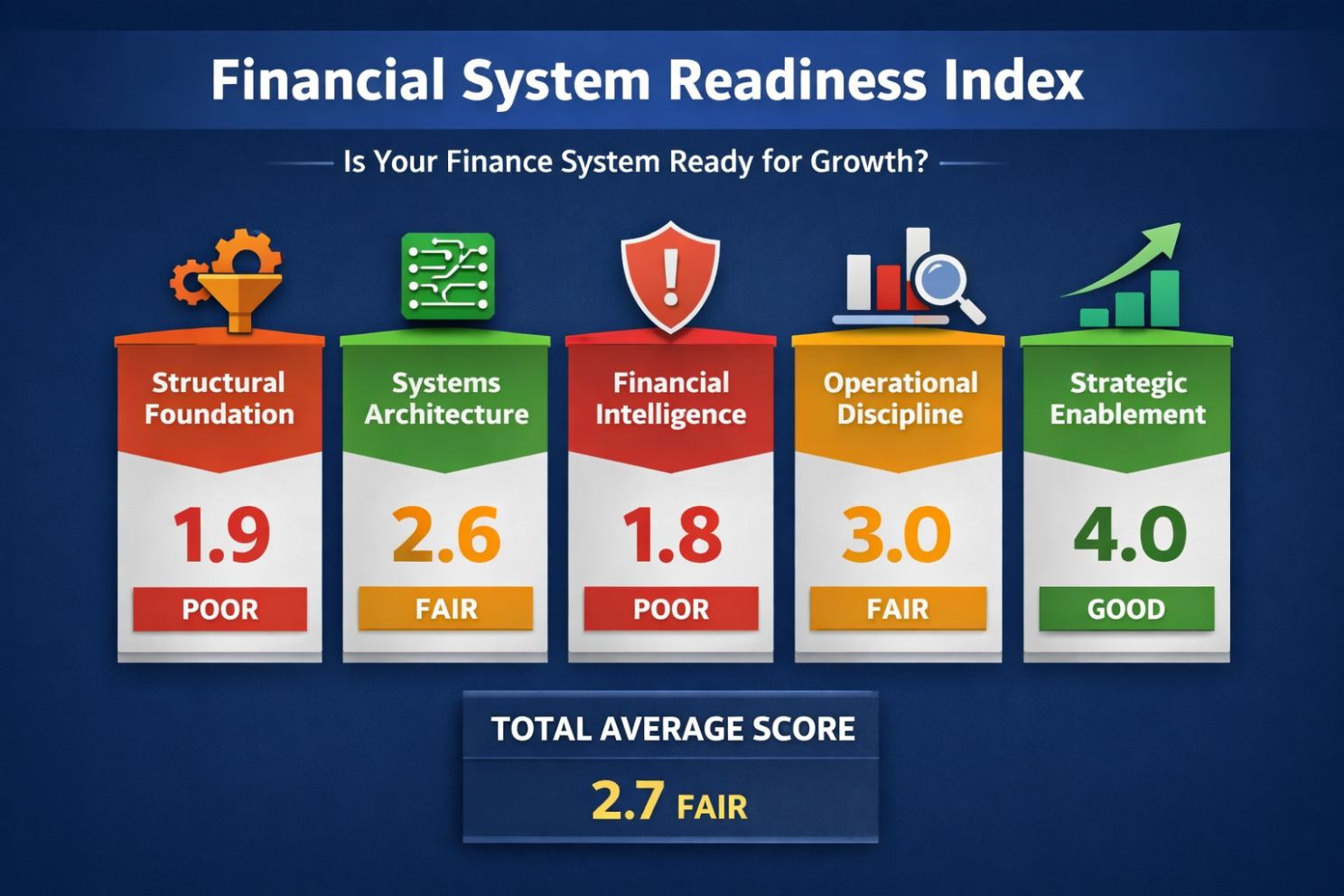
Because the solution isn’t “do more.” It’s build the right infrastructure.
The Bigger Strategic Shift
Finance leaders should not be spending their highest-value time managing workflow friction. They should be:
- Anticipating risk
- Advising the CEO
- Modeling growth scenarios
- Allocating capital
- Building long-term enterprise value
The companies that win over the next decade will not simply hire better CFOs. They will build better financial systems. And when infrastructure improves, everything else accelerates. If you’re leading a growing organization, the question isn’t whether your CFO is capable.
The question is whether your system is. Find out your financial system readiness index through a
10 minute assessment located on our website.

Ted Rose
In 1994 Ted Rose founded Rose Financial Solutions (ROSE), the Premier U.S. Based Finance and Accounting Outsourcing Firm. In 2010, the Blackbook of Outsourcing named ROSE the #1 FAO firm in the world based on client satisfaction. As the president and CEO of ROSE, he provides executives with financial clarity. Ted has also acted as the CFO for a number of growth companies and assisted with various rounds of financing and M&A transactions.
Share this article:
Visit Us On: