How Finance-as-a-Service (FaaS) Changes the ERP and Accounting Software Decision Entirely
By TED ROSE, ROSE FINANCIAL SOLUTIONS
For years, growth-stage companies have treated ERP selection as a defining moment:
“What system should we buy next?”
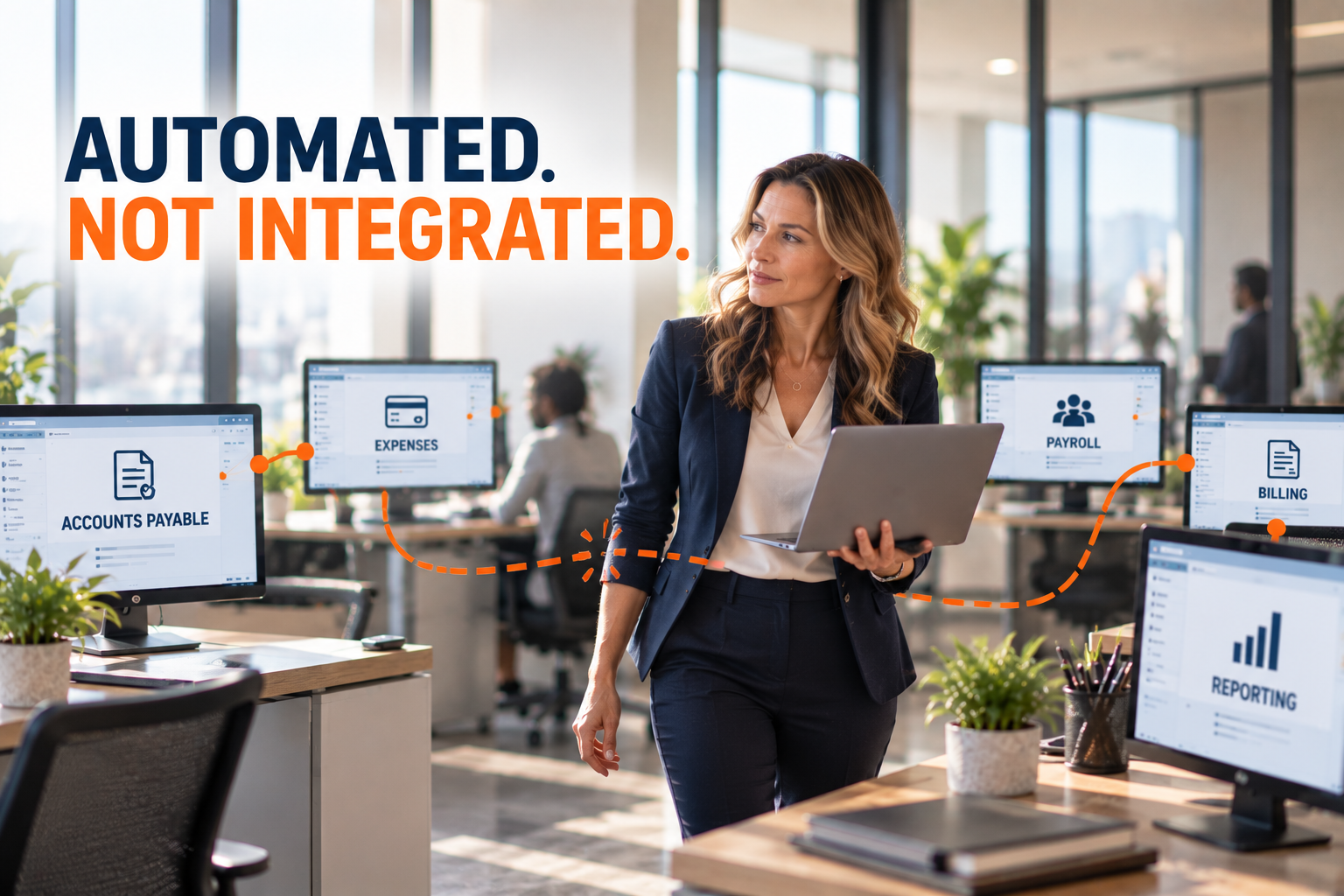
But that question is no longer the right place to start. Finance-as-a-Service (FaaS) fundamentally reframes the ERP decision—shifting the focus from software to
sustainable operating capability.
The Old ERP/Accounting Software Question (and Why It Fails)
Traditional ERP decisions assume:
- The right software will fix process gaps
- Internal teams will stabilize operations after go-live
- Consultants can design a future-state finance organization in a few months
- Better reporting will naturally follow implementation
In reality, many organizations experience the opposite:
- More complexity instead of clarity
- Over-customized systems that are hard to maintain
- Increased strain on finance talent
- Limited agility as the business evolves
ERP becomes a major investment—but not a scalable solution.
The New Question FaaS Introduces
Finance-as-a-Service changes the conversation entirely. Instead of asking:
“What system should we buy?”
Leading companies now ask:
“What financial capabilities do we need to scale—and how do we sustain them over time?”
This shift is subtle, but it changes everything.
What FaaS Actually Solves
FaaS addresses the five areas ERP was never designed to own.
- People: Access to full financial skill sets—not just transactional accounting. This includes operational finance, AI and automation, analytics, tax, and strategic insight.
- Process: Proven, scalable workflows that evolve with the business instead of freezing at go-live. This now includes Agentic AI processes.
- Technology: ERP remains the system of record, enhanced by automation and an agility layer that adapts as requirements change.
- Organization: Clear ownership and SLA monitoring of finance operations beyond the capability of accounting software, ensuring capability compounds overtime instead of degrading. This includes access to all capabilities require to scale finance to an enterprise level.
- Data: Reliable, structured data designed for Agentic AI processes, intelligence and decision-making—not just compliance reporting.
FaaS as the Operating Layer
In a modern finance model:
- ERP = System of Record
- FaaS = System of Agility = Execution + Intelligence + Change Management
FaaS becomes the operating layer that:
- Supports any ERP
- Reduces dependency on constant internal hiring
- Enables continuous optimization rather than periodic transformation
- Turns data into actionable insight that feed Agentic AI processes
ERP no longer carries responsibilities it was never built to handle.
Why This Model Matters Now
Until recently, this model was difficult to implement in practice. Today, Finance-as-a-Service has matured into a repeatable way to:
- De-risk growth
- Prepare organizations for ERP upgrades before they are forced
- Extend the useful life of existing systems
- Align finance operations with how modern businesses actually scale
FaaS is not an alternative to ERP—it is what makes ERP effective.
What This Means for Leadership Teams
If you are thinking about changing your ERP, that is usually a sign of growth—but also a warning. The real risk is not choosing the wrong software. The real risk is modernizing systems without modernizing how finance operates.
Before you change your ERP, modernize your financial operating model. When finance has the right people, processes, operating layer, ownership, and data foundation in place, ERP becomes an asset—not a constraint. That is the promise of Finance-as-a-Service. Discover more at:
www.rosefinancial.com.

Ted Rose
In 1994 Ted Rose founded Rose Financial Solutions (ROSE), the Premier U.S. Based Finance and Accounting Outsourcing Firm. In 2010, the Blackbook of Outsourcing named ROSE the #1 FAO firm in the world based on client satisfaction. As the president and CEO of ROSE, he provides executives with financial clarity. Ted has also acted as the CFO for a number of growth companies and assisted with various rounds of financing and M&A transactions.
Share this article:
Visit Us On: