
Generative AI as the Finance Interface Layer Finance Teams Are Missing
By TED ROSE, ROSE FINANCIAL SOLUTIONS
Most finance organizations don’t have a data problem. They have a clarity problem.

Reports are accurate. Dashboards are full. Models are sophisticated. Yet leadership still asks the same questions:
- What actually changed?
- Why does it matter?
- What should we do next?
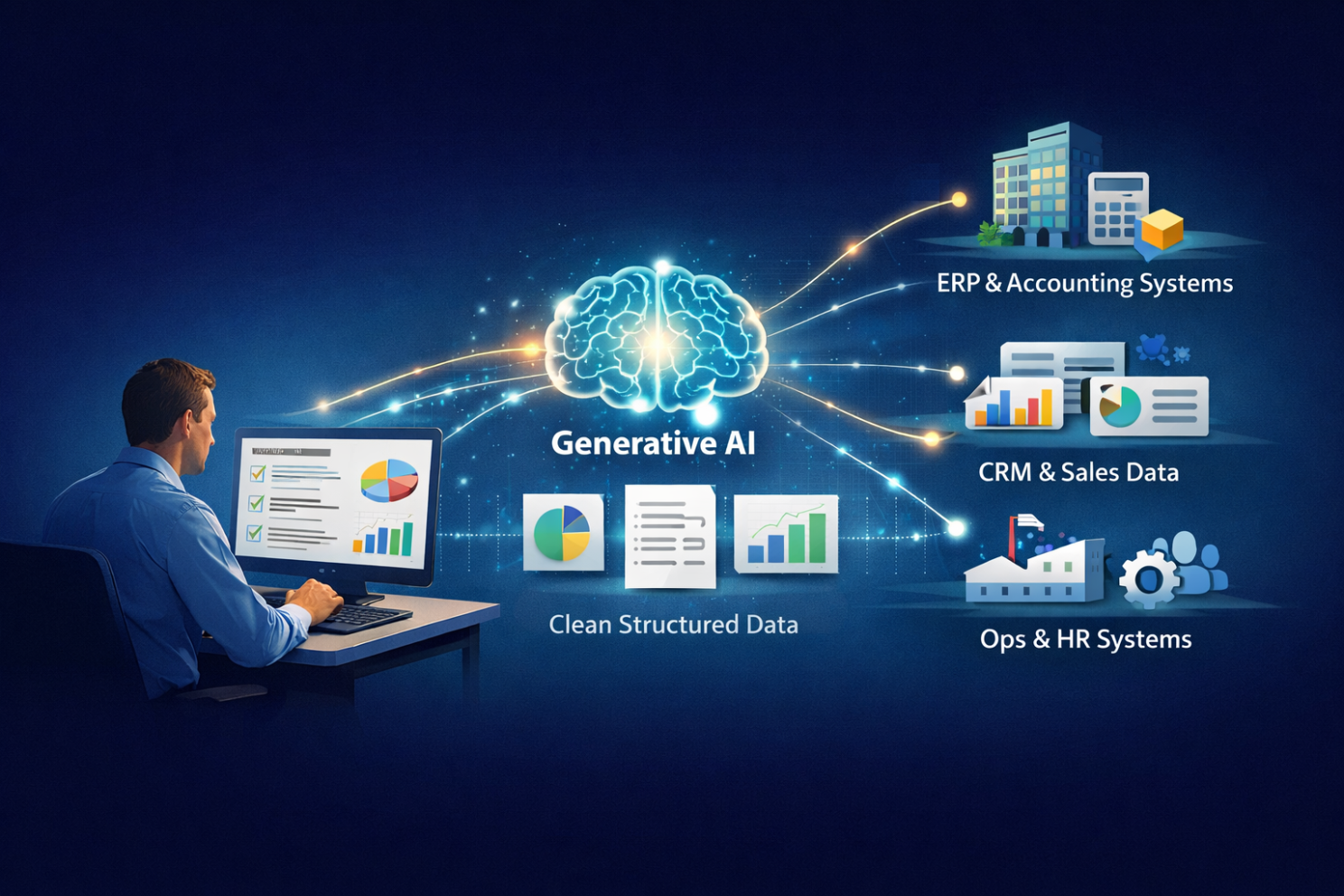
That gap between data and understanding is where Generative AI delivers its real value. Not as a system of record. Not as a replacement for ERP, accounting, or compliance platforms. But as a
finance interface layer — translating structured financial data into insight, narrative, and alignment.
When workflows are standardized and data is flowing cleanly, finance teams unlock the next level of AI value: systems that learn. This is where machine learning quietly begins to transform finance, not by replacing people, but by reducing surprises.
Level 1 AI: Rules-Based Electronic Workflow (Where Real Value Starts)
The foundation of modern finance automation is rules-based electronic workflow. This is where the majority of measurable progress is happening right now. Common examples include:
- Automated invoice routing and approval workflows
- Standardized month-end close checklists and task orchestration
- Role-based controls for compliance and segregation of duties
- Exception-based reviews instead of full manual processing
This level of AI doesn’t replace financial judgment. It removes friction.
Work moves across teams and systems without constant emails, spreadsheets, follow-ups, or heroics. Finance teams spend less time chasing status and more time managing outcomes.
Why Most Companies Stall at This Level
Many organizations never fully realize the value of workflow automation—not because the technology doesn’t work, but because their infrastructure isn’t designed for it. Finance workflows rarely live in one system. They span:
- ERP
- Billing platforms
- Payroll systems
- Banking tools
- CRM and revenue systems
When these systems don’t communicate cleanly, automation breaks down. That’s why AI in finance is fundamentally an infrastructure problem, not a tools problem. Adding more AI tools on top of disconnected systems only creates complexity—not intelligence.
What High-Performing Finance Teams Do Differently
Companies that successfully scale AI in finance take a different approach. They focus first on fundamentals:
- Connecting systems instead of replacing them
- Standardizing workflows before adding intelligence
- Building an operating layer that sits above the ERP
In this model:
- ERP remains the system of record
- Automation becomes the system of execution
- Intelligence is layered on once clean, consistent data exists
This approach reduces risk, accelerates adoption, and creates a foundation that advanced AI can actually build on.
The Bottom Line
If you want AI to work in finance, don’t start with prediction or copilots. Start by eliminating manual handoffs. Start by orchestrating work across systems. Start by making finance flow. Intelligence comes later—but only if the foundation is right.
Learn more about how ROSE and Easby can help you connect your systems today:
www.rosefinancial.com

Ted Rose
In 1994 Ted Rose founded Rose Financial Solutions (ROSE), the Premier U.S. Based Finance and Accounting Outsourcing Firm. In 2010, the Blackbook of Outsourcing named ROSE the #1 FAO firm in the world based on client satisfaction. As the president and CEO of ROSE, he provides executives with financial clarity. Ted has also acted as the CFO for a number of growth companies and assisted with various rounds of financing and M&A transactions.
Share this article:
Visit Us On: